Paleolithic finds include the first evidence of burial for sacred purposes.
The dead were believed to gain supernatural powers, and would have been respected and referred to for guidance.
Red ochre was sprinkled over the bodies; some researchers believe that this may have represented blood and symbolized life and the strength for the journey into the other world.
In Les Hoteaux (in Ain, France), for example, a late Paleolithic skeleton was found in a small trench, covered with red ochre.
There was a large stone behind its head, and it was buried with flint tools and an engraved staff that showed the status of a chieftain.
Numerous other examples of bodies have been found in stone tombs or shallow graves, together with valuable jewelry, tools and other ritual objects.
It seems the dead were being given food and tools , perhaps symbolically, to equip them for their existence in the next world.
Sometimes buried bodies have been found to have been tied up in a doubled-up position. This may have been intended to stop the dead from returning and tormenting their living descendants.
In China the remains of human beings at an evolutionary stage halfway between Pithecanthropus and Neanderthal humans were found: apart from their skulls and lower jawbones, the other bones of the bodies had been placed to represent the animals they would have eaten.
TO READ MORE ON PRIMORDIAL PEOPLE CLICK HERE
The earliest evidence of probable offerings to supernatural powers was found in Drachenloch, in the Tamina Vally, in Switzerland.
Bear Bones had been placed there with some flesh still attached to the skulls, brains intact, and some leg bones, in a state as if to be eaten.
They are thought to have been offerings to appease the animal spirits, to thank them for a successful hunt, or to seek favor with the animal spirits for future hunts.
Paleolithic humans used magic to help in hunting animals.
The principal form of magic was mimetic.
A type of magic where paleolithic humans would imitate an animal they were hunting in order to connect to its spirit and ensure success in hunting it.
Paleolithic people also used sympathetic or homeopathic; a magic where an act upon an object representing the animal would literally have an effect on the animal itself.
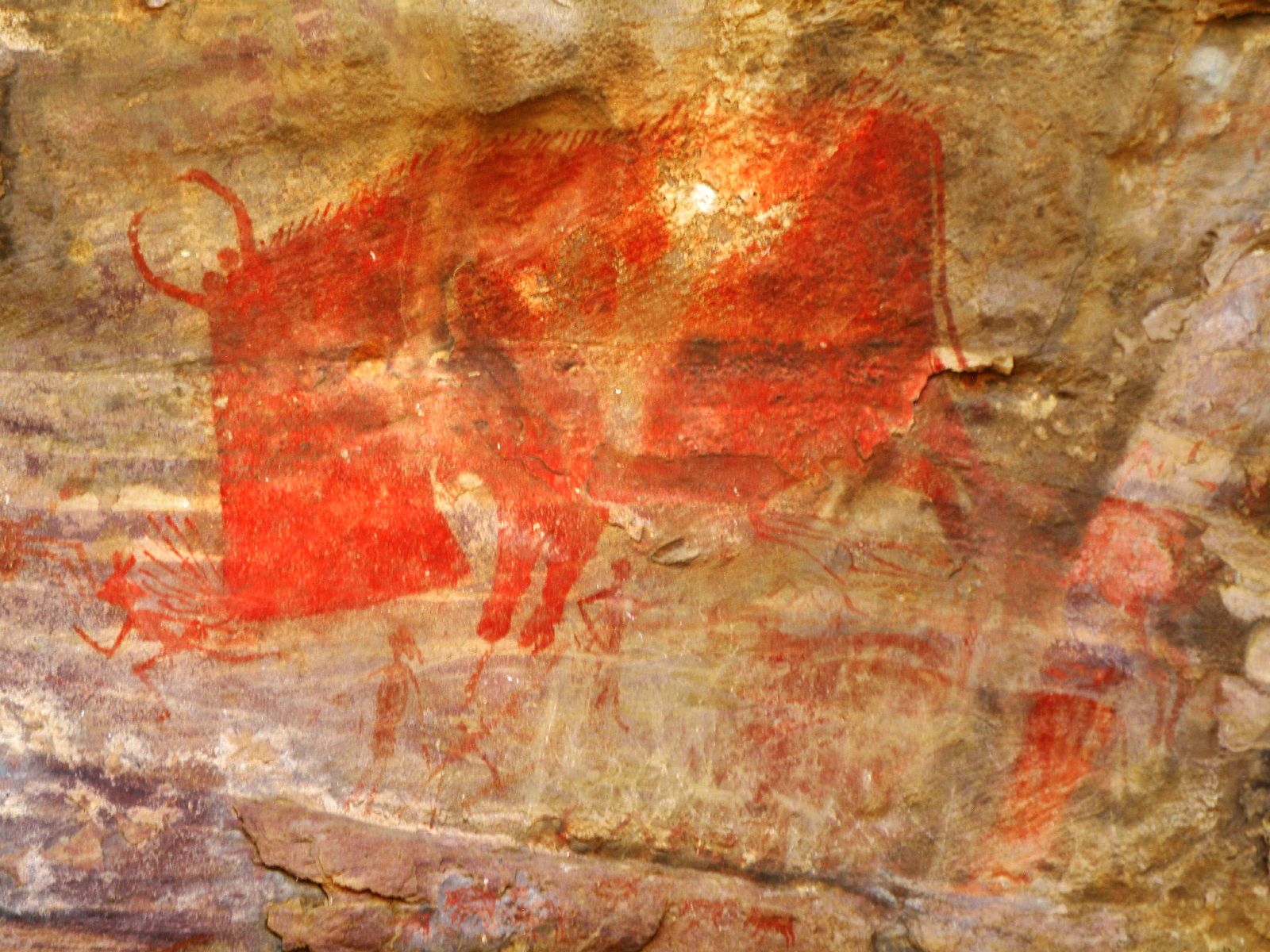
Thus clay figures and drawings of animals that have been found, which were presumably to aid success in hunting.
A constant supply of game for the hunt was crucial, and fertility magic was preformed to ensure it.
This usually involved depicting a females with offspring.
Clay models of bison in couples and a bull following a cow have also been found in France, and at La Madeleine there is a drawing showing a doe with a fawn.