Thursday, December 19, 2013

Babylonian Symbols of the Fertile Crescent

While there are many symbols relating to the Babylon here are some of the most prominent. 

The Lion was the symbol of royal power.


Lions; Museum of London, London

The dragon was associated with the supreme god, Marduk who was the patron deity of the city of Babylon. 


Black and white crop of full plate scan, from Austen Henry Layard's 'Monuments of Nineveh, Second Series' plate 19/83, London, J. Murray, 1853

Babylonian scholars developed a numbering system based on 60, which lead to our 60 min hour and our 360 degrees circles. 


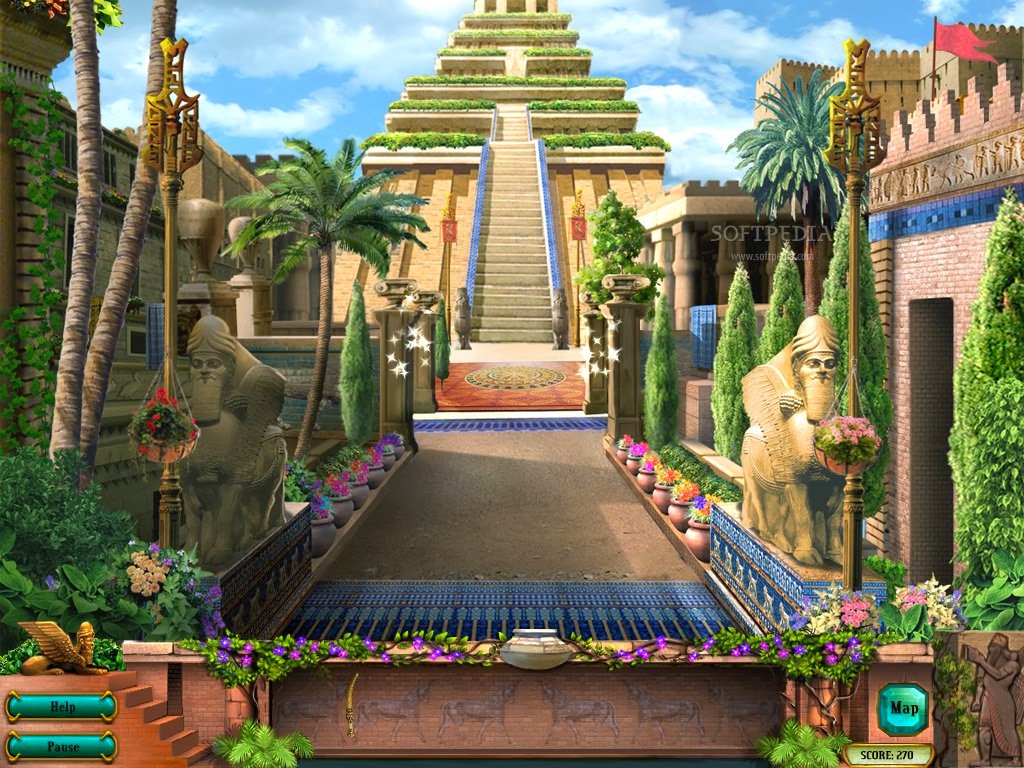
The most prominant image of Babylon is it's hanging gardens. Babylon's hanging gardens became synonymous with the ancient Judaeo-Christian image of eden, it was also one of the seven wonders of the ancient world. 


Wednesday, December 18, 2013

The Goddess Ishtar in the Fertile Crescent

Ishtar is the moon goddess in Ancient Mesopotamia. She is also known as Inanna, Astarte, Ashtar, and later as Isis in ancient Egypt. 


Statue of the Goddess Ishtar in the Louvre, Paris

Ishtar holds the power that can create and destroy and like the moon is always changing in form. 


Ishtar is also the goddess of fertility and war. She is often depicted with standing on a lion or with the talons and wings of an owl. Commonly she is also shown wearing a three-tiered crown of stars, blue lapis lazuli stones, and a rainbow necklace which symbolizes her connection with the sky. 


In Mesopotamian legend she is seen as queen of the heavens; each night riding across the sky in a chariot drawn by lions or goats. 


The constellations of the zodiac (or zodiacal belt) , then known as the Houses of the Moon, was known as the "girdle of Ishtar", a term that referded to the acient moon calander. 


Tuesday, December 17, 2013

Ziggurats in the Fertile Crescent

Ziggurats evolved from early temple complexes in the fertile crescent. Some of these pyramid-like structure reach as high as 300 ft. 

The White Temple of Uruk (Erech in the old testament), dedicated to the Sumerian God An, lord of the heavens, is one of the earliest exaples and dates back to the late 3000s BCE

Mesopotamian ziggurats were built in series of three, five, or seven. They had narrow terraces with steps for climbing to the next levels. The seven terraces were said to correspond to the seven planetary heavens. 


The first level, according to Sumerian tradition, is linked with Saturn and was painted black. The second level was linked with with Jupiter and was painted white; the third was red and was linked with Mercury. The forth blue level was associated with Venus; the fifth is level of the ziggurats is lost to time; the sixth is Mars and yellow, and the seventh and final level was silver and was thought to represent the moon. 


Sacrifices were usually held at the top level of a ziggurat because they were seen as representation of the cosmic mountain at the center of the world. Ziggurats were seen as ladders between heaven and earth creating a passage way for mortals to ascend and gods to descend.